


THANK YOU FOR SUBSCRIBING
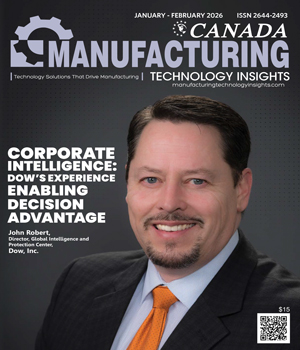
References to intelligence organizations often conjure up images of spies and secret agents, carrying out clandestine operations in far-off lands. However, "corporate intelligence" is distinct from espionage and is a growing field designed to help businesses mitigate risks, make better decisions, and identify opportunities. Corporate intelligence organizations are indispensable in the modern business environment. What is Corporate Intelligence? Corporate intelligence is a specialized form of business intelligence that centers on internal operations of a corporation or other business entity and their relation to external factors in the marketplace, global economy, and physical environment. It is the focused collection and analysis of facts and other information that responds to the needs of decision-makers and key advisors facing strategic challenges in a rapidly changing environment. In its most basic form, corporate intelligence is the collection, processing and analysis of disparate information that can be used to help a company protect its people and assets, gain an edge over its competitors and identify new markets or market opportunities. Why is it important? Corporate intelligence provides decision-makers with the information they need to make decisions in a timely manner. Good corporate intelligence ensures that the right information reaches the right people at the right time, allowing them to make the best possible decisions for the company. Enabling shorter decision cycles with improved clarity of information results in competitive advantage. It also provides management with greater insight into the market and its dynamics, thereby enabling them to make more informed decisions.
Daniel Varadaradjou, International Business Developer
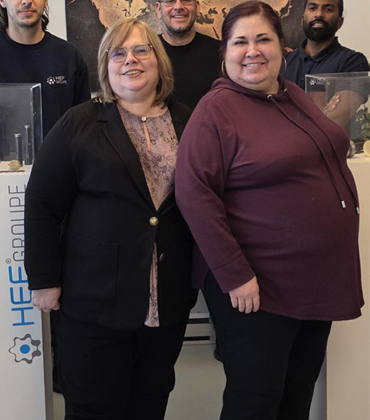
Surface durability plays a crucial role in determining the longevity of metal components. When wear, friction and corrosion are addressed early in the parts manufacturing cycle, industries such as automotive, construction, defense and energy experience fewer disruptions with parts that last significantly longer. That’s where the surface engineering expertise of Techniques Surfaces Innovation (TSI) becomes a reliability lever. TSI helps manufacturers tackle these issues by engineering metal surfaces for stronger wear, lower friction and better corrosion protection, with processes designed to scale from trials to high-volume production. It is the Canadian subsidiary of HEF Group, a French surface engineering company founded in 1953. TSI’s competence spans tribology and photonics, and it also develops surface solutions for hydrogen applications such as electrolyzers and fuel cells. Its advanced capabilities include femtosecond laser processing, functionalized powders and engineered friction parts, composite self-lubricating bushings and nitrided pins, trusted by global giants like Caterpillar. “We handle everything in-house, from machines to consumables, ensuring consistent service quality across all regions we serve,” says Daniel Varadaradjou, international business developer. This approach is reinforced by TSI’s employee ownership structure, which enhances financial stability and enables quick investments in new capacity and customer-specific solutions. This supports both small-scale experimentation and high-volume production, reducing risk and ensuring flexibility in meeting market demands..
Fadi Emeid, Founder
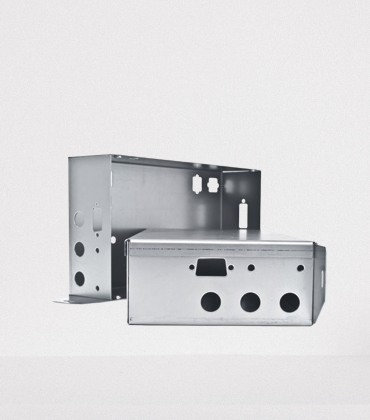
The ability to mold, adapt and evolve is what propels businesses to serve diverse industries with precision. Elias Custom Metal Fabrication Ltd. (ECM) has been following this principle for over three decades, giving them the expertise to work with a wide range of materials and cater to different industry verticals. Drawing on its decades of experience, ECM is well-positioned to tackle challenges that emerging companies haven’t even encountered yet. It essentially acts as a one-stop shop, tailoring solutions to the tee. Their expertise in engineering, production and logistics allows the company to offer end-to-end solutions—from design assistance and cost analysis to prototyping and full-scale production. “Our strength lies in versatility, driven by our expertise in utilizing diverse materials. This enables us to manufacture a wide range of products for multiple industries while meeting the specific demands of each sector,” says Fadi Emeid, founder. Team ECM is proficient in helping clients fine-tune their product designs for higher efficiency and cost savings. They work closely with the clients, guiding them from the initial concept development to production. The team carefully selects materials to meet project requirements, ensuring structural integrity at every turn. Once the designs are finalized, the company brings them to life with precise fabrication techniques. Precision is key, and with laser cutting and brake forming, it delivers metal components that fit clients’ specifications—ideal for architectural projects, commercial builds and custom retail fixtures. Its powder coating, polishing and other finishing offerings complement the fabrication process. This slew of services guarantees resistance from corrosion, minimal wear and tear, protection against environmental damage while also enhancing visual appeal. The result? Products that are ideal for high-end retail and architectural applications.
In a market saturated with skincare offerings, Vicora Cosmeceuticals stands out as a full-service contract manufacturer specializing in unique skincare and cosmeceutical products. It partners with brands to unlock new potential, providing tailored formulations and strategic guidance for market entry. Rather than simply producing the next trending product, Vicora creates a path for sustainable, long-term success by acting as a growth catalyst for brands. “We don’t see ourselves as just a contract manufacturer, but we see ourselves as the guardian of our clients’ brands,” says H. Vanaki, executive manager. Innovation through Partnership Vicora’s approach to skincare development and manufacturing has delivered proven results across various cases, solving key challenges for clients. One notable success story involves a brand that struggled with product consistency despite extensive testing and formulation development. When the brand turned to Vicora, the team’s in-depth knowledge and advanced equipment helped stabilize the formula, ensuring consistent texture, performance and stability across batches. Successfully producing over 10 batches helped the brand restore its reputation and re-enter the market confidently. This commitment to quality is further reinforced by Vicora’s robust industry credentials. The company holds a Health Canada Site License, making it a trusted producer of OTC Natural Health topicals. Vicora is also a licensed processor of USDA Organic cosmetic products and maintains GMP certifications for both NHP products and cosmetics. Every stage of production adheres to these rigorous guidelines, ensuring both safety and compliance while ensuring the highest standards of quality.

Corrosion

Drew Hevle, Manager of Corrosion Control, Kinder Morgan
SolidWorks

Christopher Downing, Sr. Director of Operations/Manufacturing, MKS Inc
Industrial Automation

Scott Marcus, Process Engineering Manager, Flex-N-Gate
Industrial Automation

Mariana Filipic, Senior Director of Global Quality, Mold-Masters [NYSE: HI]
Industrial Filtration

Wayne Borrowman, Director, Research and Development, CIMCO Refrigeration Inc

Industrial Automation
Joel Colvis, Senior Director of Maintenance & Facilities, Daikin Comfort [TYO: 6367]

Corrosion
Jose I. Perez Alvarado, Director of Operations and Industrial Engineering, PFC. Toronto, OSI Systems [NASDAQ: OSIS]
Corrosion costs Canadian manufacturers 2.9 percent of GDP, but advanced surface protection technologies can cut these losses, boost asset life, and significantly improve profitability and competitiveness.
Canada’s industrial sector is leveraging AI, real-time analytics, and green chemistry to enhance asset longevity, enable autonomous corrosion management, and drive sustainable, high-performance infrastructure solutions.
The Durability Advantage: How Asset Stability Is Defining Manufacturing’s Next Era
Techniques Surface Innovation, our featured company, exemplifies this transition from discrete processing toward operationalized durability. By integrating wear, friction and corrosion engineering earlier in the manufacturing cycle and decoupling surface performance from late-stage, corrective treatments, they are testing a significant hypothesis: that surface stability is not a premium enhancement, but the fundamental mechanism for reducing lifecycle cost, unplanned downtime and asset replacement risk.
The potential of this approach resonates throughout the issue. In CXO Perspectives, Drew Hevle of Kinder Morgan reframes corrosion control as a systematic, preventive discipline, positioning it as a consistent lever for waste reduction and environmental efficiency rather than episodic maintenance. This complements the operational perspective outlined by Jose I. Perez Alvarado of OSI Systems, where paperless systems and real-time data continuity elevate execution discipline, ensuring decisions made in design and engineering remain intact on the shop floor.
As we explore advancements in materials science, digital manufacturing and sustainability this month, a clear signal emerges. The organizations that will define the next cycle will be those that elevate value beyond throughput and unit cost. They will be the leaders capable of scaling durability, ensuring performance is a stabilizing, predictable presence across the asset lifecycle. In 2026, reliability stands as the definitive operational asset.

Manufacturing Technology Insights Weekly Brief
Be first to read the latest tech news, Industry Leader's Insights, and CIO interviews of medium and large enterprises exclusively from Manufacturing Technology Insights
