

THANK YOU FOR SUBSCRIBING
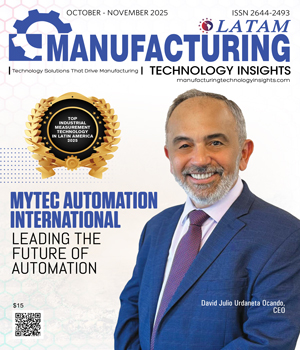
In nearly two decades, Mytec Automation International has transformed from a modest, family-run business into one of Mexico’s foremost engineering firms, specializing in industrial instrumentation, process control, and automation solutions. This journey of growth and success speaks volumes about the company’s resilience, forward-thinking vision, and the commitment of its leadership to redefine the role of automation in industries where precision is non-negotiable. This commitment is reflected in the strength of Mytec’s team, which includes more than 50 seasoned professionals serving a broad range of sectors including oil and gas, chemicals, power generation, automotive, cement, and food and beverage. The driving force behind Mytec’s rise to prominence is CEO David Julio Urdaneta Ocando, a visionary technologist whose strategic insight and commitment to excellence have steered the company from regional obscurity to international acclaim. Under Urdaneta’s leadership, Mytec has cultivated a reputation for delivering more than just equipment; it has become known for its ability to ensure operational continuity. His approach is rooted in a deep understanding of both the technical and human aspects of industrial automation. “We do not sell components; we deliver operational continuity. Our clients trust us with the heartbeat of their operations,” says Urdaneta, emphasizing the crucial role that trust plays in his company’s relationship with clients. Mytec’s solutions, therefore, go beyond merely solving a technical problem. They provide a foundation for the operational success of some of the world’s most critical industries. The Urdaneta Business Architecture™ At the heart of Mytec’s operations is a unique methodology, the Urdaneta Business Architecture™, which serves as a blueprint for how the company engages with clients and delivers value. Unlike traditional approaches to automation and process control, which often emphasize one-off solutions and products, the Urdaneta Business Architecture™ is a holistic framework designed to integrate every part of the business, from initial design to long-term maintenance and support. “This methodology is not just a way of doing business; it’s a way of thinking about how we can serve our clients in a deeper, more meaningful way,” Urdaneta explains.
The advanced materials industry plays a critical role in the evolution of modern technology. Engineers today face the dual challenge of ensuring electromagnetic compatibility while managing heat dissipation in increasingly compact and high-performance devices. From 5G infrastructure to medical equipment, aerospace applications, and electric vehicles (EVs), the demand for reliable EMI shielding and thermal management solutions continues to grow. Electromagnetic interference (EMI) can disrupt device functionality, degrade performance, and cause regulatory compliance issues. At the same time, the thermal load in electronic systems has escalated, requiring innovative solutions to prevent overheating and maintain long-term reliability. Engineers must strike a delicate balance between shielding effectiveness, material flexibility, and environmental durability—all while meeting stringent industry regulations such as RoHS, REACH, and UL compliance. Integrating Shielding and Thermal Management Into the Design Process One of the biggest challenges in electronic design is ensuring that EMI shielding and thermal management solutions are not afterthoughts but integral to the development process. A reactive approach to these issues can lead to costly redesigns, manufacturing delays, or compromised performance. Schlegel Electronic Materials (SEM) works closely with design engineers to integrate shielding and thermal solutions early in the design cycle. Engineers don’t have to modify their designs to accommodate standard materials, SEM specializes in developing tailored solutions that fit seamlessly within existing constraints. This collaborative approach enables companies to accelerate product development while maintaining performance, reliability, and compliance. Material Science Innovations for EMI and Thermal Solutions SEM’s portfolio of advanced materials includes fabric-over-foam gaskets, conductive elastomers, and wire-oriented silicone (WOS) gaskets, each designed to meet the evolving demands of modern electronics. • Conductive Elastomers: Incorporating materials like silver-plated aluminum or nickel-coated graphite into a silicone base, these solutions offer both EMI shielding and environmental sealing, ensuring protection against moisture, dust, and vibration. • Wire-Oriented Silicone Gaskets (WOS): These materials integrate metal wires into elastomeric matrices, providing superior EMI and radio-frequency interference (RFI) suppression while maintaining mechanical resilience. • Custom Die-Cut Components: For applications requiring precise geometries and low compression force materials, SEM delivers solutions tailored to specific engineering challenges, reducing design constraints and optimizing performance. • Thermal Management Solutions: As heat dissipation becomes a critical factor in high-power electronics, SEM offers phase-change materials, thermally conductive gaskets, and other solutions to enhance thermal efficiency and system reliability.

Chemicals are the bread and butter of paper recycling, preparing the material for reuse. However, ‘chemical treatment’ carries negative connotations, reflecting concerns about paper recycling mills and their potential environmental safety risks. Citriczyme is breaking this stigma with over two decades of experience designing and applying organic chemical products in the pulp, paper and water treatment industry. Its safe, non-toxic solutions improve water quality, raw material and finished product integrity. While many manufacturers promote biodegradable products, most take long periods of time to break down, placing a burden on wastewater treatment facilities and missing the mark on true sustainability. This challenge led Cesar Urbina to found Citriczyme, driven by his search for a greener solution with minimal environmental and health risks. “If something is dangerous or toxic to personnel and environment, it isn’t suited for us,” says Urbina, Director. “Our products are oil and hydrocarbon-free, non-flammable and readily biodegradable.” Citriczyme’s products are widely used by recycling-based brown paper and tissue manufacturers, comprising more than 90 percent of its client base. Its organic products treat paper for cleanliness, resistance and microbiological control, among other properties. The natural character of the product, devoid of polymers and other problematic substances, enhances fiber resistance without disrupting the pulping process. They also require minimal water for application, promoting efficiency and environmental sustainability. These advantages are critical as Mexico doesn’t have virgin pulp production or water resources—making proper recycling essential. When combined with the side effects of repeated chemical treatment and other processes on paper, Citriczyme’s organic products are a lifesaver. The company’s products offer significant advantages over traditional cleaning methods when resolving ‘stickies.’ Citriczyme’s non-flammable, organic solutions significantly decrease solvent use, enhance safety, lower production costs and reduce explosive risks around machines. This results in improved machine ‘runnability’ and more efficient wastewater treatment— benefitting tissue manufacturers. Moreover, Citriczyme solution for stickies is vital as they can break the sheet during high-speed production, resulting in operational issues, costly downtime and inefficiencies. Its organic solution ensures a safer resolution without health and environmental risks.
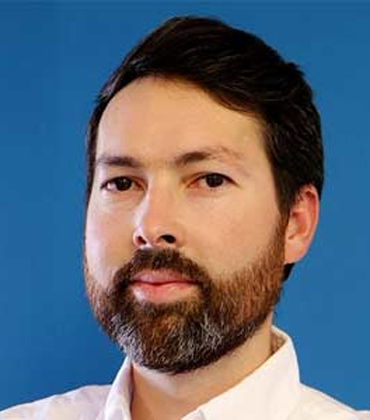
Cidclay Gonçalves, Corporate Manufacturing Engineering Senior Manager, Daimler Truck

Franklin Rodriguez, Regional Director North America, Advanced Manufacturing Engineering, Nelson Global

Marcos Beraldo, Senior Manager - Performance, Cargill
Gustavo Vieira, Global Chief Information Officer, CMPC [BCS: CMPC]
Lucas Fontoura Goulart, Operational Technology and Innovation Manager, Cedro Textil
Latin America's manufacturing sector is transforming through the adoption of advanced measurement technologies, thereby enhancing predictive capabilities in response to global demands for sustainability and precision.
The pulp and paper industry in Latin America is leveraging industrial measurement technology to enhance efficiency, reduce costs, and improve sustainability through real-time process control and precise data.
Building A Resilient Industrial Ecosystem In Latin America
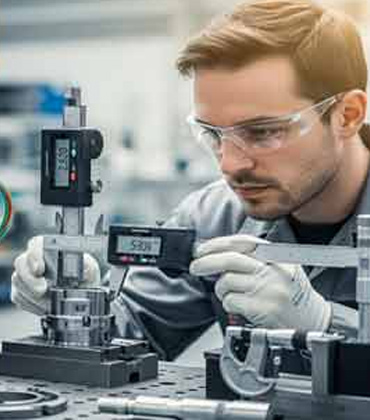
Industrial measurement technology is providing the accuracy required for modern production across multiple sectors. Real-time data, IoT-enabled sensors, and predictive analytics allow manufacturers to reduce downtime, improve product quality, and manage resources more efficiently. These tools are particularly valuable in resource-intensive industries, where careful monitoring of water, energy, and materials supports cost reduction and environmental compliance.
At the same time, improvements in pulp and paper processes are reshaping traditional manufacturing in the region. Investments in automated controls, closed-loop water systems, and energyefficient machinery are helping reduce the sector’s environmental footprint while opening opportunities in the fast-growing sustainable packaging market. With regional demand rising and international buyers seeking alternatives to plastics, pulp and paper producers are emerging as important contributors to Latin America’s circular economy.
Advances in materials are driving industrial transformation in high-value sectors such as automotive, aerospace, and renewable energy. The use of lightweight composites and durable alloys reduces energy consumption while enhancing product performance. These innovations rely on precise measurement systems during production and often complement paper-based solutions in packaging and logistics, highlighting the broader connections within the manufacturing value chain.
In this edition, we feature Mytec Automation International for driving change across these fields. We also feature Cidclay Gonçalves, Corporate Manufacturing Engineering Senior Manager at Daimler Truck, and Xavier Serres Escoda, CIO North Latam and Customer Experience Agile Product Group Leader Americas at Danone, for their insights on leadership and innovation shaping the future of industry.

Manufacturing Technology Insights Weekly Brief
Be first to read the latest tech news, Industry Leader's Insights, and CIO interviews of medium and large enterprises exclusively from Manufacturing Technology Insights
