

THANK YOU FOR SUBSCRIBING
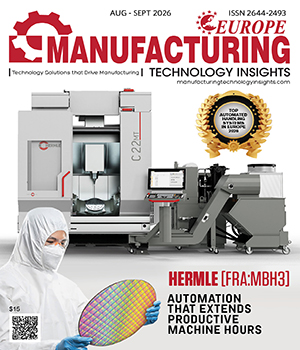
Extending machining into unattended hours requires more than an automated pallet change. Different workpieces, fixtures and cycle times must be prepared, stored and sequenced so the machine can move from one order to the next without waiting for an operator. For high-mix manufacturers, the challenge is keeping that flow flexible as priorities change. HERMLE [FRA:MBH3] addresses this through handling systems integrated directly with its machining centres. Pallet and workholding storage, ergonomic setup, precise transport and production control come together within a compact cell. Instead of automating one repetitive component, the systems accommodate manufacturers whose part dimensions, machining times and order requirements vary continually. A job occupying a machine for hundreds of hours may be followed by smaller components requiring only minutes each. HERMLE’s strength lies in keeping that varied queue moving without turning each change into a lengthy reconfiguration.
Yannik Naumann, Sales Director
In corrugated manufacturing, production efficiency is limited less by machinery and more by how material flow is controlled across the plant. Conveyor systems do not simply move products; they determine whether production remains continuous or becomes constrained by imbalance. Dücker Conveyor Systems operates within this reality by treating intralogistics as a coordinated production system rather than a mechanical infrastructure. For more than three decades, the German engineering company has specialised in intralogistics infrastructure for corrugated packaging plants, environments where continuous corrugator output must align with downstream processes operating at variable speeds. To manage this imbalance, Ducker developed Advanced System Control and Routing (ASCOR), its proprietary factory flow control platform, which works alongside heavy-duty conveyor systems to coordinate material movement across the plant. “We are not only a provider of conveyors,” says Yannik Naumann, sales director. “We are also a software company that gives manufacturers full visibility into production flow and the ability to control what happens across the factory.”.


Lightweight materials are emerging as a critical driver of innovation across industries like space exploration, aeronautics and mobility in large sense. Pursuing lighter, stronger, and more efficient components is reshaping how organisations improve performance, reduce operational costs, and minimise energy consumption. Gradel, a Luxembourg-based engineering company that designs special purpose equipment for Space Industry, is leading this push toward smarter and more efficient lightweight components. For over 15 years, the company has provided solutions for handling, testing, and transporting satellites. However, recognising the rising demand for ultra-lightweight materials and their transformative potential across industries, Gradel charted a bold course of diversification five years ago. This strategic pivot gave rise to GRAM (Gradel Robotic Additive Manufacturing), a groundbreaking process poised to redefine composite manufacturing. This process sets new benchmarks in lightweight materials’ strength, sustainability, and precision across industries. “We saw an opportunity to add greater value to components and realised that lightweight solutions were no longer just a priority for space—they are essential across industries,” explains Claude Maack, CEO. GRAM: A Technological Leap in Lightweight Components Gradel’s GRAM technology is revolutionising composite manufacturing with its innovative, endless filament winding process. By mimicking bionic structures, GRAM aligns fibres along the natural flow of forces, adhering to the principle of “form follows force.” The GRAM process integrates inserts directly into the winding path, unlike traditional methods involving drilling holes and cutting fibres, compromising structural integrity. The result is a breakthrough in performance and weight reduction. Components manufactured using GRAM can handle five times the load of state-of-the-art solutions while achieving up to 70% weight savings compared to metal counterparts. Besides its versatility, GRAM supports many materials, including carbon, basalt, glass, and even renewable fibres like hemp or flax. These fibres can be paired with epoxy resins or customisable resin systems, including bio-based and recyclable options, allowing Gradel to tailor each solution to the specific needs of its applications. Its unique flexibility ensures optimal performance and sustainability through circularity by design, making GRAM a game-changer for industries striving to innovate responsibly. In industries like aviation, lightweight delivers not just operational savings but also significant environmental benefits. For example, reducing one kilogram of weight on an Airbus A320 can save 100 kilograms of fuel annually, translating to 350 kilograms less CO2 emissions. As airlines prepare for carbon taxes set to take effect by 2026, the ability to cut emissions and operating costs through innovative lightweight solutions becomes increasingly critical. “Using ultra-lightweight components isn’t just a technical benefit—it’s a business imperative,” Maack emphasises. “The operational savings, combined with environmental impact reductions, make GRAM a transformative process.”
Material Handing

Thierry Wipff, Global Manufacturing Technology Engineering Tires, Continental Tires [FWB: CON]
Connected Worker
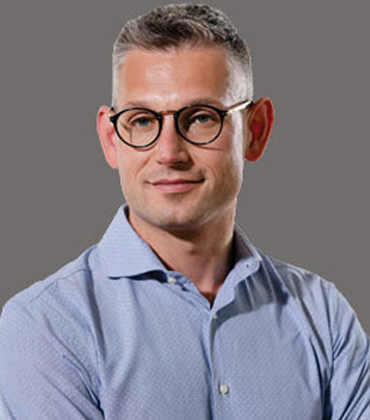
Alessio Preti, Director Industrial Strategy and Capex, Philip Morris International [NYSE: PM]
Material Handing
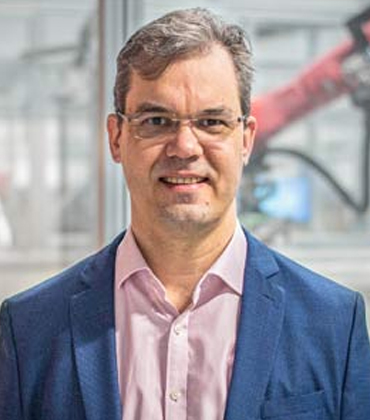
Janne Kuivalainen, CTO & Head of Technology, Danfoss Drives
Connected Worker

Maurizio Pietropaolo, Industrial Supply Chain IS Technician, Thales Alenia Space
Smart Factory

Andrea Rapetti, VP Smart Factory, Datwyler Group

Advanced Material
Detlef Schramm, VP R&D, FRANKISCHE Rohrwerke

Rubber and Tire Tech
Ralf Anderhofstadt, Head of Center of Competence Additive Manufacturing - Daimler Trucks & Buses, Daimler Buses | EvoBus GmbH
Heavy-duty conveyor systems manufacturing in Europe enhances material flow efficiency, ensures durability, supports automation integration, and enables reliable, scalable industrial operations.
Automated handling systems help European manufacturers improve productivity, flexibility, safety, sustainability, and operational efficiency through intelligent connected manufacturing technologies.
Shaping the Future of European Manufacturing
Leading this edition is HERMLE [FRA:MBH3], recognised as the Top Automated Handling Systems in Europe 2026. The company has advanced manufacturing automation by combining high-performance machining with intelligent handling systems that help manufacturers make better use of machine capacity and support more autonomous production. Its integrated approach delivers the precision, consistency and reliability manufacturers need while improving efficiency across the production process.
We also feature Dücker Conveyor Systems, recognised as the Top Heavy-Duty Conveyor Systems Manufacturer in Europe 2026. The company has built its reputation by designing conveyor solutions that perform reliably in demanding industrial environments. With a strong focus on dependable material handling, application-specific engineering and longterm durability, it helps manufacturers move heavy materials more efficiently while supporting smoother and more reliable operations.
Our CXO Insights section features Maurizio Pietropaolo, Industrial Supply Chain IS Technician at Thales Alenia Space, who shares his perspective on how digital factory initiatives are improving collaboration, efficiency and manufacturing performance. Janne Kuivalainen, CTO & Head of Technology at Danfoss Drives, explains how intelligent drive technologies and product innovation are helping manufacturers build operations that are more efficient, adaptable and ready for the future.
The companies and leaders featured in this edition show that manufacturing excellence is built through operational discipline, continuous innovation and strong leadership. We invite you to explore their stories and insights and discover the ideas and technologies shaping the future of manufacturing across Europe.

Manufacturing Technology Insights Weekly Brief
Be first to read the latest tech news, Industry Leader's Insights, and CIO interviews of medium and large enterprises exclusively from Manufacturing Technology Insights
