



THANK YOU FOR SUBSCRIBING
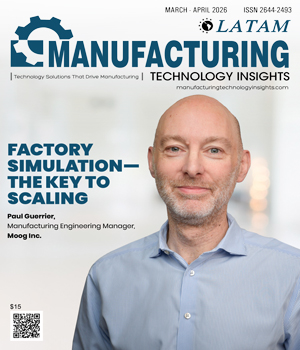
Scaling production is one of the hardest challenges in aerospace manufacturing. Moving from prototype to production—or from dozens of units to hundreds—often exposes effects of process failure modes and inefficiencies that weren’t visible at smaller scales. Real life is messy: equipment layouts, people flow, logistics, and quality control all interact in complex ways. Decisions about equipment capital expenditure, floor space, and staffing must be made with confidence, yet that confidence is often undermined by significant uncertainty. This is where factory simulation becomes the key to scaling. We use commercially available software to create a digital manufacturing environment. This provides a powerful solution for bridging the gap between conceptual factory planning and physical reality. Imagine combining the analytical rigor of an Excel spreadsheet with the spatial intelligence of a 3D factory layout—then adding the ability to run countless “what-if” scenarios that mirror how real production behaves. Using commercially available software we now have: a way to simulate, test, and refine factory design decisions before concrete is poured, machines are purchased, a production area is re-organized or operators are hired and trained.
Why do traditional production schedules fail in volatile and rapidly changing manufacturing environments Modern manufacturing operates in dynamic production environments. Material delays, unexpected machine breakdowns, and shifting customer priorities can invalidate carefully built weekly schedules within hours. Planners compensate with spreadsheets, manual adjustments, and repeated rescheduling cycles, often reacting faster than traditional systems can respond. The challenge is not data availability, but decision speed under constraint. How does Optimiz.ai enable real-time production planning decisions between ERP and MES systems Optimiz.ai was built to provide that capability. Developed from applied research conducted inside a live industrial operation, it operates as a decision layer between ERP and MES systems, enabling planners to manage production variability and constraints in real time. Instead of automating fixed workflows, it combines AI-driven optimization, evolutionary algorithms, and real-time factory inputs to recalculate feasible production plans as conditions change. Planning moves from fixed scheduling into a resilient, optimized decision process aligned with operational performance. “You can’t lock a schedule and expect the factory to behave. Planning has to adapt with what’s actually happening on the shop floor,” explains Jaison Vieira, CEO. Unlike conventional APS systems that assume stable assumptions, the platform operates amid incomplete data, frequent disruptions, and the continued importance of human judgment. Its optimization models were validated in active factory operations, not laboratory simulations. Adaptive Optimization across the Manufacturing Stack How do adaptive objective functions evaluate thousands of production scenarios under changing factory constraints Optimiz.ai does not rely on hard-coded rules or fixed sequencing logic. It applies adaptive objective functions and weighted scoring to evaluate thousands of potential production scenarios in minutes, dynamically balancing due dates, capacity, setup times, material availability, and logistics constraints. Planners adjust strategic priorities, such as delivery reliability, throughput, or setup reduction, while the algorithm recalculates outcomes under updated conditions. When disruptions occur, the revised plan reflects current factory constraints without manual intervention..


Hector Frias, Consulting Director
Why do traditional ERP and Lean planning systems fail under real factory conditions? Every manufacturer plans production. The question is whether the plan survives the shift. In most Latin American factories, it doesn’t. ERP systems generate plans from demand and routing data and supply, but don’t calculate against real capacity, real material availability or real constraints. A clean bill of materials and a refined backlog still produce outputs that break the moment a mold change runs long, a shipment arrives late or a machine goes down mid-run. Lean tools like TPM and Kanban improve floor visibility, but their visual structures depend on sustained discipline and when the implementation team leaves, that discipline often leaves with it. Planning and Scheduling Consultores (PSC) launched in Querétaro, Mexico, in 2004 after its team spent years implementing ERP and Lean systems and watching this pattern repeat. The insight was specific: planning modules failed not because the data was wrong but because the tools did not model constraints. PSC built its entire practice around that gap, became one of Asprova APS’s longest-standing partners outside Japan and, in 20 years, has maintained all the companies it implemented as its current installed base. What a Factory Teaches Fifty Countries How does PSC apply constraint-based planning in complex global manufacturing operations? How that practice works is best understood through what it produces at Fogel Centroamericana, a Guatemalan manufacturer of commercial refrigerators. Fogel ships more than 10,000 customized units per month to over 50 countries, synchronizing purchased parts, electrical and mechanical subassemblies and in-house graphic arts for branded display units. Every refrigerator can differ. Every delivery date is a cross-border commitment. The engagement started where every project begins, but with a proof-of-concept. The team documented Fogel’s objectives, constraints, performance indicators and current conditions across master data, personnel, IT infrastructure and management tools. The output was a formal APS specification sheet, built jointly with Fogel’s teams, mapping where the company stood and where it needed to go. The firm does not arrive with a fixed methodology. Its consultants have deep grounding in Theory of Constraints, Lean, DDMRP, demand management, Value Stream Mapping, process manufacturing and so on, but which techniques apply depends on the client’s operation. “We have no preconceived notions about the techniques to be implemented. Our cross-cutting, multidisciplinary approach allows us, together with our clients’ business knowledge, to define the most appropriate planning and scheduling models to achieve key performance indicators,” says Hector Frias, consulting director..
Digit Technologies is a forward-thinking startup on a mission to transform how manufacturers and distributors operate in an industry dominated by outdated ERP systems. Its platform unifies essential processes, including production, inventory, order tracking, procurement and shipping, into one intuitive interface to deliver real-time visibility, automation and collaboration. Unlike traditional ERP systems, which are slow to deploy, costly to maintain and often rigid, Digit is built for speed, flexibility and affordability, helping manufacturers go live in days. “We built Digit to be the all-in-one system—powerful enough to handle the complexity of manufacturing, but simple enough for anyone on the shop floor to use without training,” says Dan Koukol, CEO and co-founder. For years, manufacturers have patched together spreadsheets and siloed tools, making it hard to plan ahead, spot issues early or improve efficiency. Digit’s founders knew this problem well because they had lived it. Koukol spent nearly a decade working closely with manufacturers across the U.S. as a consultant, helping untangle bottlenecks and improve operational performance. Driven by a passion for hands-on problem-solving, he joined a struggling injection molding manufacturing business as the CEO and turned it profitable. In both roles, it became clear that no modern software tools were truly built for the realities of the factory floor. In 2021, Koukol and his co-founders launched Digit with a simple but ambitious idea: to build the system they always wished existed—a modern operating system for manufacturing, built by manufacturers, not just engineers.


As products grow increasingly intricate and time-to-market becomes a critical determinant of competitive viability, SAP partner ILC is quietly emerging as a powerhouse in Product Lifecycle Management (PLM). At its core, ILC addresses a fundamental conundrum that global manufacturers face: managing massive configuration complexity without compromising speed, cost, or scalability. Its answer is the Product Variant Concentrator, an easy-to-use flagship solution for companies grappling with thousands of ever-evolving product configurations. This offering is built on a distinctive philosophy of being “fully SAP-embedded” without requiring code. It operates without disrupting clients’ existing SAP architecture and eliminates the need for middleware, third-party connectors, or workaround integrations. Such seamless native integration unlocks vast possibilities, streamlining data flow between engineering and production. It minimizes friction, delays, errors, and overhead, ultimately maximizing profits through better resource utilization and enhanced productivity. “Our solution combines a preconfigured reference process with open customization. You won’t find anything else like it on the market. Clients don’t have to choose between standardization and flexibility; they get both,” says Markus Heise, CEO of ILC North America. This balance between structure and adaptability has proven valuable for manufacturers under pressure to innovate rapidly. One lighting manufacturer, for instance, previously struggled to manage just 300 product variants due to the manual burden placed on its engineering team. After deploying ILC’s PLM suite, that same team handles over 12,000 variants with faster turnaround and reduced costs. More than just achieving control, the client gained strategic agility, being able to respond faster to market demands without expanding headcount or compromising quality.
Pulp and Paper Manufacturing
Rodrigo Bastos, Planning and Control Manager, Wilson Sons
Pulp and Paper Manufacturing

Alberto De Icaza, Head External Affairs Mexico, ZF Group
Industrial Automation

Brian Lieser, EVP Industrial Automation, Belden
Connected Worker

Douglas Pedro de Alcantara, Chief Technology Officer, ROMI S.A: [BVMF: ROMI3]
Sensor Tech

Gustavo Vieira, Global Chief Information Officer, CMPC [BCS: CMPC]
Sensor Tech

Alberto Corredera Gonzalez, Director of IT, Room Mate Hotels
Metal Working and Machine Tools

Joao Ribeiro, Deputy Head of Sales | Commercial Strategy | Marketing | CRM | Business Innovation | Connected, Honda Brasil
Sensor Tech
Lucas Fontoura Goulart, Operational Technology and Innovation Manager, Cedro Textil

Sensor Tech
Cidclay Gonçalves, Corporate Manufacturing Engineering Senior Manager, Daimler Truck
AI intelligent automation enhances efficiency, resilience, and manufacturing technology performance while accelerating digital transformation across global enterprises.
AI is revolutionizing Latin American manufacturing by enhancing efficiency, but challenges like infrastructure and skilled labor shortages remain.
Advancing Intelligent Automation Across Manufacturing
Optimiz.ai, recognized as the Top AI Intelligent Automation Solution in Latin America 2026, demonstrates how intelligent automation is reshaping production planning. Built to operate between ERP and MES environments, the platform functions as a decision layer that continuously recalculates production plans based on real-time factory inputs and changing operational constraints. Instead of relying on static schedules or manual adjustments, manufacturers can evaluate thousands of production scenarios while balancing factors such as capacity, setup times and material availability. This adaptive optimization approach allows planning teams to respond to disruptions more effectively while maintaining transparency and operational control across manufacturing systems.
Insights from industry leaders further enrich this issue. Lucas Fontoura Goulart, Operational Technology and Innovation Manager at Cedro Textil, discusses the emergence of Industry 5.0. He explains how human expertise and advanced technologies work in tandem to enhance productivity, safety and sustainability across industrial operations. Complementing this perspective, Alberto Corredera González, Director of IT at Room Mate Hotels, highlights the importance of strategic planning, collaboration and disciplined technology adoption in successfully implementing process automation initiatives.
Together, these insights underscore a defining industry theme: technology delivers value when it strengthens human decision-making and operational discipline. We invite readers to explore this edition to understand how forward-thinking organizations are building more adaptive and intelligent manufacturing operations.

Manufacturing Technology Insights Weekly Brief
Be first to read the latest tech news, Industry Leader's Insights, and CIO interviews of medium and large enterprises exclusively from Manufacturing Technology Insights
