

THANK YOU FOR SUBSCRIBING
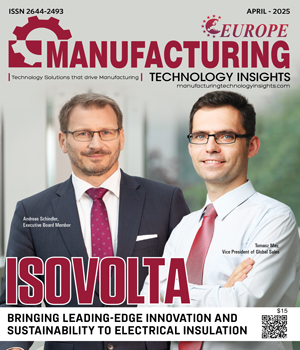
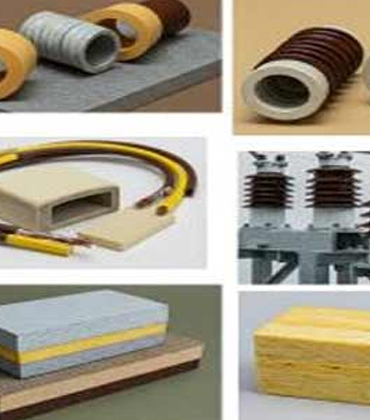
Reliability, quality, and innovation—ISOVOLTA operates on these core pillars. A trailblazer in the electrical insulation domain, it brings deep manufacturing and material expertise to industries grappling with developmental challenges associated with motors, generators and transformers. Renowned for its cutting-edge solutions and high-performance insulation materials, ISOVOLTA partners with businesses worldwide to co-create nextgeneration electrical systems. By enabling advancements in energy efficiency and performance, the company empowers clients to thrive in highly competitive markets. This cements its position as a leader in the field. “Technology leadership is our internal mantra. We are pioneers in innovation and sustainable solutions, grounded in rigorous scientific methods, premium raw materials, and collaborations with top-tier suppliers and chemists. Every solution we deliver is meticulously tested and validated to ensure exceptional performance and reliability,” says Tomasz May, vice president of global sales. ISOVOLTA has significantly strengthened its capabilities in recent years through strategic investments in building high-tech laboratories and expanding its research and development (R&D) teams. These efforts resulted in a comprehensive suite of proven insulation solutions tailored to the unique demands of rotating and static electrical machines. Fueling Progress with R&D Excellence At the heart of its success is a commitment to R&D. Recognising the transformative potential of trends like e-mobility, ISOVOLTA has directed its efforts toward crafting novel insulating materials that meet the challenges of modern industries. An excellent example is its work in the e-mobility sector, which presents opportunities and challenges. The industry’s openness to innovation has accelerated ISOVOLTA’s development pace, accelerating its efforts to engineer insulating materials that are rigorously tested, proven, and designed for long-term performance. In response to the surging demand for energy-efficient electric motors and generators, ISOVOLTA developed high-performance materials that enhance energy density, creating more compact yet powerful machines. “We aim to deliver high-performance materials that empower clients to develop competitive and efficient solutions,” states Andreas Schindler, executive board member.
In a fast-changing world, staying competitive demands innovation at every stage of a product’s lifecycle. PTC stands at the forefront of this transformation, empowering businesses across industries to design, produce and maintain their products with precision and efficiency. From planes and medical devices to wind turbines and computers, its software solutions streamline engineering, manufacturing and operations to enable the creation of smart, connected products. Above all, PTC fosters collaboration, drives sustainable design, boosts service lifecycles and ensures customers are well-equipped to lead in a rapidly evolving landscape. “We will be disciplined and unemotional when it comes to prioritizing our time and resources on the products and product integrations that will create the most value for our customers. To use an analogy, we plan to put more wood beyond the most important arrows to ensure we drive the best outcomes for our customers,” says Neil Barua, President and CEO. Weaving The Digital Thread Originally focused on parametric design, PTC grew into a comprehensive provider of solutions spanning computer-aided design (CAD), product lifecycle management (PLM), application lifecycle management (ALM), augmented reality (AR) and the industrial Internet of Things (IIoT). These domains exemplify PTC’s commitment to equipping businesses with the tools and technologies needed to thrive in today’s competitive landscape. At the heart of PTC’s philosophy is ‘the digital thread’ that connects data, systems and stakeholders across the entire product lifecycle to create a unified, authoritative source of truth. In essence, its holistic approach facilitates real-time collaboration, reduces errors and enhances decision-making processes by ensuring that all relevant information is accessible and actionable. Beyond operational efficiency, the digital thread fosters innovation by equipping teams with insights and tools to iterate quickly and bring new ideas to market. This approach is complemented by its software solutions, which allow PTC to streamline every step of the journey, from initial design to end-of-life product management and ensure businesses can confidently meet their goals. Smart Solutions For A Connected Tomorrow PTC’s diverse and powerful portfolio caters to industries ranging from manufacturing and healthcare to aerospace and automotive. Its CAD solutions, including Creo and Onshape, are synonymous with precision and creativity. The company’s flagship 3D CAD software, Creo, equips engineers to design, simulate and optimize complex products with unparalleled accuracy. Meanwhile, Onshape, a cloud-native CAD platform, transforms product development through realtime collaboration and remote access. In the realm of PLM, Windchill, a powerful PLM software solution, provides a secure platform for managing product data and processes, enabling seamless collaboration across teams and geographies. For companies seeking a cloudbased approach, Arena, PTC’s cloud-native solution for PLM and Quality Management Systems (QMS), integrates PLM with quality management systems, offering an intuitive solution for streamlined operations. Similarly, PTC’s ALM solution, Codebeamer, supports industries like healthcare and automotive by integrating workflows and ensuring traceability to meet stringent regulatory requirements.


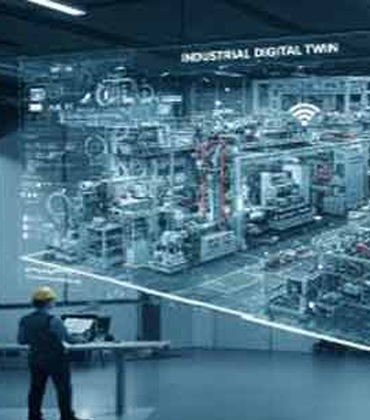
Framence is transforming how industrial teams access and manage critical information, cutting through the complexity of scattered data with its photorealistic digital twins. Acting like a ‘Google Street View’ for industrial environments, its solution provides a seamless, instantly accessible view of assets—eliminating the inefficiencies of navigating multiple systems. In fast-paced industrial settings, having real-time access to accurate data is not just a convenience—it is essential for efficiency and informed decision-making. Across industries, engineers and technical specialists spend up to 30 percent of their working hours searching for crucial data buried in ERP platforms, IoT networks, asset management tools, and cloud databases. The constant back-and-forth between interfaces makes retrieving insights time-consuming and inefficient. Framence streamlines this process by serving as a unified, user-friendly access point that integrates effortlessly with existing systems. Without altering third-party platforms, it ensures that teams can quickly locate and leverage the information they need, no matter where it is stored. Since its launch in 2019, the company has prioritized making digital twins fast, easy, and cost-effective to create and update—giving teams a smarter, more efficient way to navigate spaces, collaborate, and manage assets. “Whether managing a vast real estate portfolio or overseeing complex technical assets on a factory floor, Framence equips teams with everything they need at their fingertips—helping them spend less time searching and more time driving results,” says Adrian Merkel, Managing Director of Framence. Photorealistic Twins for Seamless Data Integration The company’s technology captures a photorealistic representation of facilities and embeds essential data points within the imagery. For example, engineers inspecting a pump in a facility no longer need to search through multiple software systems for maintenance records, IoT readings, or specifications. Instead, they can click on the pump within the digital twin, instantly accessing all relevant data from sources like SAP or IoT Cloud in one centralized, visually intuitive interface. This streamlined approach dramatically accelerates workflows and enhances decision-making. Beyond centralizing data access, Framence also addresses a key limitation of traditional digital twins—keeping them up to date. Conventional methods, such as laser scanning, require specialized equipment and professional expertise, making updates costly and infrequent. Over time, these digital twins become obsolete, making them less dependable for real-world applications. Framence takes a different approach, allowing users to update models using widely available cameras, including smartphones. This enables on-site staff to effortlessly capture new data without waiting for external specialists, ensuring the digital twin always reflects the current state of assets and facilities.
Sheet Metal Processing

Alexander Klose, Executive Vice President Overseas Operations and Product Strategy, Aiways
Motion Control

Larissa Hack, Innovative Leader in Digital Transformation, Manager of Digital Twin, Mercedes-Benz AG
Motion Control

Nicholas Berry, Senior Electrical Construction Manager, Tesla
Motion Control

Kenneth Ullmann, VP and Chief Digital Officer, GN Group
Motion Control

Tom Salisbury, Director of Sustainability, GKN Automotive

Motion Control
Jose Jorge Santos, Director of IT Infrastructure and Operations, Salvador Caetano Group

Motion Control
David Guerra Rodríguez, Software Engineering Manager, Applus+ IDIADA
The electrical insulation materials industry in Europe is critical in ensuring electrical systems' safety, reliability, and efficiency in various sectors,
European industries increasingly turn to digital twin technology to optimise processes and drive innovation.
Smarter Systems, Safer Workplaces and a Greener Planet
The biggest game-changer is industrial digital twin technology, which lets manufacturers create real-time virtual models of their operations. Combining AI-driven analytics and IoT connectivity, companies can fine-tune production, predict maintenance issues before they become costly breakdowns and cut downtime. But it’s not just efficiency getting a boost—safety is, too. Smart insulation, equipped with sensors that detect overheating, voltage spikes and other risks in real-time, is making factories more secure. When integrated with IoT networks, these systems provide 24/7 monitoring, helping businesses stop potential disasters before they happen.
At the same time, sustainability is becoming a core part of manufacturing strategies. Industries like electronics and insulation materials are shifting toward eco-friendly alternatives that cut waste and make recycling easier. The EU is stepping in with initiatives like the proposed Chips Act 2.0, aiming to strengthen local semiconductor supply chains and push forward next-generation innovations.
Driven by these trends, the global smart manufacturing market is projected to reach $998.99 billion by 2032 at a CAGR of 14 percent.
This Manufacturing Technology Review edition brings thought leadership articles from Nicholas Berry, Senior Electrical Construction Manager at Tesla. He highlights his strategic leadership, expertise in advanced energy systems, and commitment to innovation, driving Tesla’s large-scale projects and sustainable infrastructure. Additionally, Jose Jorge Santos, Director of IT Infrastructure and Operations at Salvador Caetano Group, stresses the need for continuous authentication and strict access controls regardless of whether users or devices are inside or outside the corporate network perimeter.
This edition features the Top Electrical Insulation Materials Manufacturer of the Year in Europe 2025, Industrial Digital Twin Platform of the Year in Europe 2025 and Product Life Cycle Management Company of the Year in Europe 2025. We hope you find the right partner to meet your organisation’s needs.

Manufacturing Technology Insights Weekly Brief
Be first to read the latest tech news, Industry Leader's Insights, and CIO interviews of medium and large enterprises exclusively from Manufacturing Technology Insights
