


THANK YOU FOR SUBSCRIBING

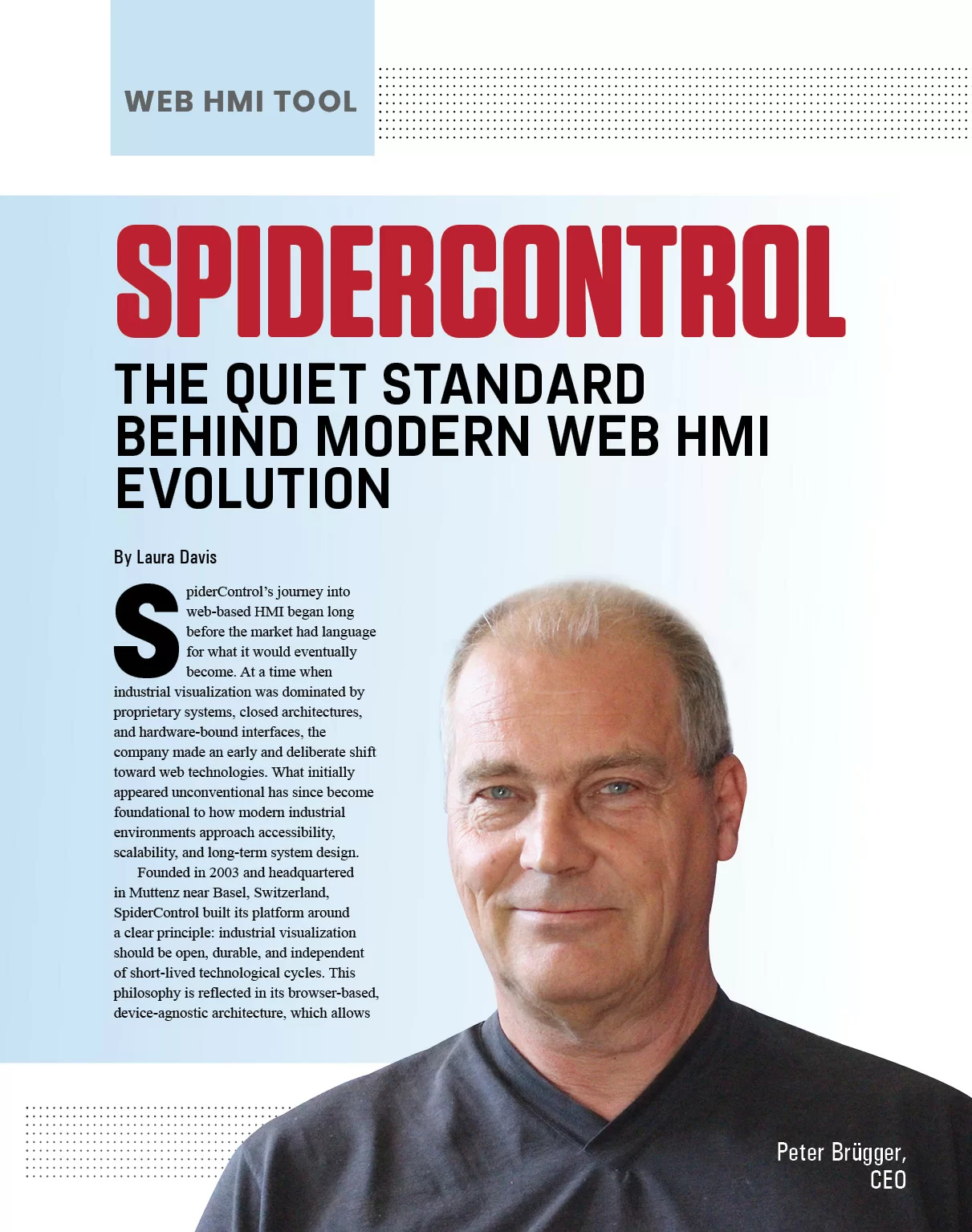
 Peter Brügger, CEO
SpiderControl’s journey into web-based HMI began long before the market had language for what it would eventually become. At a time when industrial visualization was dominated by proprietary systems, closed architectures, and hardware-bound interfaces, the company made an early and deliberate shift toward web technologies. What initially appeared unconventional has since become foundational to how modern industrial environments approach accessibility, scalability, and long-term system design.’s journey into web-based HMI began long before the market had language for what it would eventually become. At a time when industrial visualization was dominated by proprietary systems, closed architectures, and hardware-bound interfaces, the company made an early and deliberate shift toward web technologies. What initially appeared unconventional has since become foundational to how modern industrial environments approach accessibility, scalability, and long-term system design.
Founded in 2003 and headquartered in Muttenz near Basel, Switzerland, SpiderControl built its platform around a clear principle: industrial visualization should be open, durable, and independent of short-lived technological cycles. This philosophy is reflected in its browser-based, device-agnostic architecture, which allows systems to be accessed through standard web browsers across PCs, tablets, and mobile devices—eliminating the need for proprietary viewers and reducing friction at the point of use.
The strategic significance of this decision lies in how it redefined the relationship between control systems and user interfaces. As Peter Brügger, CEO, explains, “The idea behind it was to use a web browser, which is an open standard instead of a proprietary viewer, and to benefit from a network-oriented software architecture.”
Bringing the User Interface Closer to the Control System
How does integrating visualization with control systems improve efficiency and system adaptability?
Rather than treating visualization as a separate layer requiring duplication and synchronization, SpiderControl embedded it within a network-driven model that connects directly to the control environment.
This shift addressed a persistent inefficiency in traditional HMI architectures, where the separation between control logic and interface design often resulted in redundant configurations, higher engineering effort, and limited adaptability. By bringing the user interface closer to the control system through web-native communication, SpiderControl created a more integrated and maintainable structure, where visualization layers interact seamlessly with PLC and SCADA environments.
Over time, the market has moved in this direction, with widespread adoption of HTML5-based visualization and browser-driven interfaces. Yet the distinction, as SpiderControl positions it, is not merely the use of web technologies but the depth of their integration into the system’s core design. The company’s early commitment was not to a trend but to an architectural model—one that continues to define its advantage as industrial systems evolve.
Our abstraction layer protects customer investments from such volatility.
Using Template-Based Design and Code Generation
Why is long-term compatibility important in industrial software and system lifecycle management?
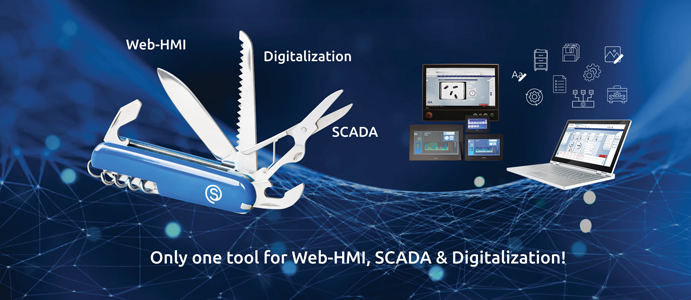 One of the defining characteristics of SpiderControl’s platform is its emphasis on long-term compatibility. In an industry where technological obsolescence can impose significant costs, the company has invested heavily in creating an abstraction layer that shields customers from the volatility of underlying frameworks. This design ensures that projects developed decades ago can still be opened, maintained, and upgraded using the latest versions of the software. Such continuity is rare in industrial software and has become a critical factor in customer loyalty.
Brügger highlights the importance of this approach in managing technological risk. “Our abstraction layer protects customer investments from such volatility,” he notes, pointing to the frequent lifecycle disruptions caused by rapidly evolving web technologies. By decoupling the engineering tools from the underlying implementation, SpiderControl allows customers to focus on system functionality rather than constantly adapting to new frameworks.
This focus on durability extends to the company’s approach to engineering efficiency. Through the use of template-based design and code generation, SpiderControl has introduced a concept it refers to as zero engineering. The goal is not to eliminate engineering teams or fundamentally alter organizational structures but to enhance productivity by automating repetitive tasks. Engineers can then concentrate on higher-value activities such as system design and optimization.
In what way does platform scalability support diverse industrial automation use cases?
The impact of this approach is measurable. In highly automated environments, engineering effort can be reduced by as much as 80 percent, while even more conservative implementations typically achieve reductions of around 30 percent. Maintenance costs, meanwhile, are often cut by half or more. These gains are achieved not through disruption but through alignment with existing workflows, allowing organizations to adopt the technology without restructuring their operations.
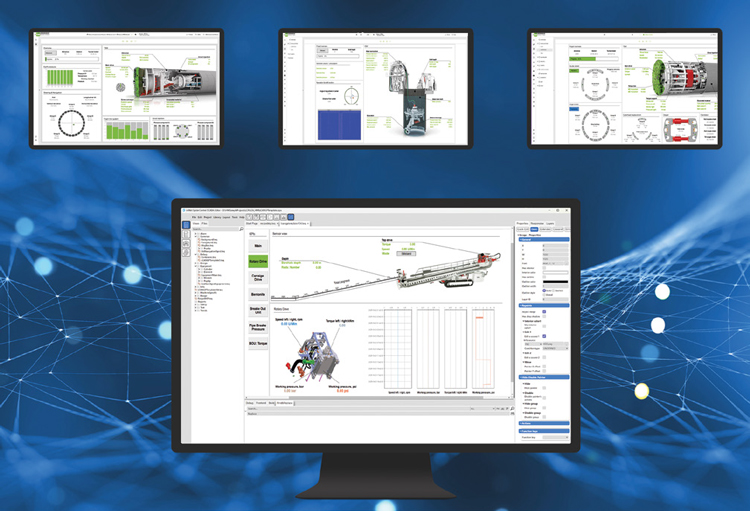
A notable example of this scalability can be seen in the company’s work with Herrenknecht, a global leader in tunnel-boring machines. In this case, SpiderControl’s tools are used to generate HMIs automatically based on variable lists, database libraries, and template projects. The resulting systems are deployed both on physical machines and within digital twin environments, demonstrating the platform’s ability to operate seamlessly across physical and virtual domains.
Ensuring Adaptability
Interoperability is another critical dimension of SpiderControl’s value proposition. Industrial environments often involve a mix of legacy systems and modern hardware, creating challenges in integration and migration. SpiderControl addresses this through its ability to import and convert existing HMI projects, including those from third-party platforms. This capability not only preserves prior investments but also enables gradual transitions to new architectures without the need for complete system overhauls.
Security and regulatory compliance are equally central to the platform’s design. As frameworks such as the Cyber Resilience Act introduce new requirements, SpiderControl has focused on modularity and platform independence to ensure adaptability. By reusing code across multiple products and collaborating with large organizations and specialized consultants, the company maintains a proactive stance on compliance while minimizing complexity for end users.
The economic implications of SpiderControl’s architecture vary depending on the type of customer, but the overarching theme is a reduction in total cost of ownership. High-volume manufacturers benefit from hardware savings enabled by the company’s MicroBrowser technology, which allows cost-effective embedded devices to function as thin clients. Occasional users, on the other hand, benefit from simplified upgrades and reduced training requirements, as the same tool can be used across different projects and over extended periods.
Balancing Innovation with Control
For specialized machine builders, the ability to migrate and adapt HMI systems across diverse applications provides significant value, while traditional manufacturers benefit from engineering reusability and standardized design patterns. Across all these segments, the common denominator is lower long-term maintenance costs, particularly in scenarios where systems must be updated years after their initial deployment.
This emphasis on lifecycle efficiency reflects a broader understanding of industrial reality, where systems are expected to operate reliably over decades rather than years. In such contexts, the ability to maintain and adapt existing solutions becomes as important as the initial deployment itself. SpiderControl’s architecture is designed with this reality in mind, ensuring that customers are not forced into costly migrations or frequent retraining cycles.
The evolution of web-based HMI is increasingly intersecting with advances in artificial intelligence. SpiderControl recognizes the potential of AI to enhance automation and productivity but approaches it with caution. The company sees value in using AI as a support tool rather than as a fully autonomous system, particularly given the challenges associated with maintaining and modifying AI-generated code over time.
Brügger articulates this perspective clearly: “AI must therefore be used in a structured and well-defined way. The engineer should remain the captain of the ship.” This philosophy underscores SpiderControl’s broader commitment to balancing innovation with control, ensuring that new technologies enhance rather than complicate the engineering process.
Shaping the Future of Industrial Visualization
The planned integration of an AI-based help agent in the company’s Editor 9 reflects this measured approach. By focusing on clearly defined tasks such as code generation and documentation support, SpiderControl aims to leverage AI in ways that are both practical and sustainable. This aligns with its longstanding emphasis on maintainability and long-term usability, ensuring that new capabilities do not introduce new risks.
As the industrial automation landscape continues to evolve, SpiderControl’s position is defined not by rapid adaptation to trends but by consistent adherence to principles that have proven resilient over time. Its commitment to open standards, architectural abstraction, and customer-centric design has enabled it to navigate technological shifts without compromising stability or performance.
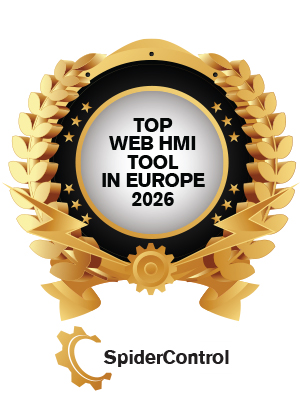
In an industry often characterized by short-term innovation cycles and fragmented solutions, SpiderControl offers a different model—one that prioritizes continuity, efficiency, and adaptability. Its recognition as the Top Web HMI Tool in Europe 2026 is not merely an acknowledgment of current capabilities but a reflection of a long-standing vision that continues to shape the future of industrial visualization.
Company
SpiderControl
Management
Peter Brügger, CEO
Description
SpiderControl is redefining industrial visualisation through a web-native architecture that prioritizes longevity, interoperability, and efficiency. By combining abstraction-driven design with automation and browser-based access, it enables scalable, future-proof HMI systems that significantly reduce engineering effort, lifecycle risk, and long-term operational costs.

Manufacturing Technology Insights Weekly Brief
Be first to read the latest tech news, Industry Leader's Insights, and CIO interviews of medium and large enterprises exclusively from Manufacturing Technology Insights
