

THANK YOU FOR SUBSCRIBING


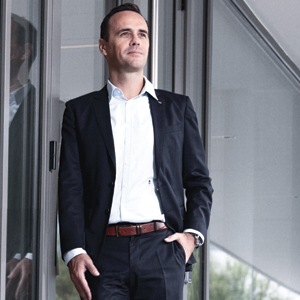 Christophe Coulongeat, Executive President, Robotics
Stäubli Robotics’ Executive President of Robotics, Christophe Coulongeat presented the company’s growth strategy at Automatica 2022, a major event for smart automation and robotics. The growth strategy focuses on three main areas. The first is building leadership in four specific industries: pharmaceuticals, food, medical robotics, and photovoltaics.
“We want to sustainably outperform the industrial robotics market and be recognised as the undisputed leader in these areas. Our technologies are continuously evolving to support the changing needs of a wider variety of customers,” says Coulongeat.
Unveiling the Stericlean + Series
All four industries - pharmaceuticals, food, medical robotics, and photovoltaics - impose rigorous demands in terms of the work environment, which happens to be a specialty of Stäubli Robotics. Its robots are widely used in industries with strict hygienic requirements. The robots’ encapsulated, washdown compatible design makes them the benchmark in sensitive production areas. As stricter regulations take effect and more processing tasks shift from humans to robots, robots engineered to higher hygienic standards and superior cleanability offer proactive solutions.
The Hygienic and Humid Environment (HE) series robots are a market leader, thanks to their compliant and unique design, high performance, and ability to eliminate bacterial contamination risks. The robots have revolutionized the food industry as well as numerous critical functions in harsh environments such as waterjet cutting, washing-cleaning, and deburring.
Most recently, Stäubli Robotics unveiled its Stericlean+ series. Representing the next generation of Stäubli’s renowned Stericlean robots, they are designed exclusively for use in isolators. They are capable of carrying out numerous tasks in pharmaceutical and biotech labs and production facilities, including auxiliary tasks such as picking and filling containers, weighing and capping them with high repeatability, accuracy, and output—all without human intervention.
High-End Applications and Smart Factory Automation
The second part of the growth strategy for Stäubli Robotics focuses on high end applications. Stäubli Robotics’ high-performance robots come with an extensive range of kinematics capable of handling more demanding and complex applications.
One example is fibre laser cutting. At Automatica, Stäubli Robotics introduced the TX2-160L HDP (High Dynamic Precision) robot, a special version for fibre laser cutting. In addition to the company’s proprietary JCS drive technology, which guarantees high dynamics and accuracy, the TX2- 160L HDP has an absolute measurement feature. This enables it to achieve repeatability beyond the standard TX2- 160L model with its accuracy of ± 50 µm. The TX2-160L HDP has a long reach, and can cut geometric shapes as well as complex free-form surfaces in three dimensions with unprecedented accuracy.
Stäubli Robotics’ growth strategy also includes redoubling its focus on smart factory automation. It took a major leap in this area when it added mobile robots, automated guided vehicles (AGVs), and collaborative robots or “cobots” to its portfolio.
Facilitating the Shift to E-Mobility
While Stäubli Robotics is making a concerted effort to expand in pharmaceuticals, food, medical robotics, and photovoltaics, it continues to be active in many other industries. This includes general manufacturing and automotive, which were among the first to adopt robotic automation.
Automotive is now undergoing one of the greatest transformations: the shift from internal combustion engines to electric power units. There are major ramifications for production, including automation and robots, which are taking on different tasks. This reorientation of applications presents opportunities for Stäubli Robotics, since processes in battery production, for example, require ultra-fast, high-precision robots.
Stäubli Robotics supplies thousands of robots for the production of lithium-ion batteries, and the tasks they perform could not be more varied. They assemble the “stacks” in prismatic cells and put together rectangular or cylindrical cells to form battery packs. Other jobs include applying conductive paste, bolting the units together, and handling them during inspection, as well as delivery to and retrieval from charging stations. The robots facilitate highly flexible production, enabling manufacturers to keep up with product design trends while maintaining compliance in sensitive environments.

The Robotics Industry Offers A World Of Possibilities, As It Is The Cornerstone Of The Fourth And Fifth Industrial Revolution.

Soaring demand is challenging battery manufacturers’ time-to-market capabilities, creating the need for more automation. Austrian specialists Nordfels and Voltlabor delivered a highly efficient solution, the VOLTjet®, a fully integrated cell containing multiple inspection points and full traceability. It uses Stäubli TS2 four axis robots, known for their process reliability and precision, for testing and assembly processes along with a proprietary laser welding technology to form battery modules.
The electrification of vehicles also requires mass production of e-components. Here, suppliers and manufacturers of automated systems for component production rely on Stäubli’s robotics expertise. Eberhard AG, a German manufacturer of special machinery, was commissioned by a major automotive supplier to design and build a system for assembling high-voltage connectors in Mexico. In the plant, six ceiling-mounted Stäubli robots will handle five million connectors per year. Their tasks include optical inspection and leak testing, as well as tray packing.
Food is another industry where Stäubli Robotics is increasingly making its presence.
Dutch company DERO GROEP, a specialist in automated solutions for cheese production, processing, treatment, and packaging, chose Stäubli robots primarily because they meet the tough hygienic requirements of cheese processing. In HE design, they can be cleaned with water or chemicals daily without affecting their performance or longevity. The company later developed an automatic derinding machine for rectangular cheese with two more Stäubli robots.
At a Siemens Gamesa factory in Cuxhaven, Germany, a complete 350-ton nacelle for an offshore wind turbine rolls out the door every day. In the factory’s ultra-modern flow production environment, four heavy duty AGVs from Stäubli WFT, a Stäubli subsidiary, transport parts from station to station.
Heavy-duty AGVs from Stäubli pitch in to ensure maximum flexibility. The AGVs maneuver themselves into position beneath the frames, lift them, and move them down the line. Three of Stäubli platform AGVs with 200-ton load capacities are integrated into the production lines. They get around with the help of patented omnidirectional drive units supported on rollers.
The fourth, a larger AGV with a load capacity of 450 tons, transports the finished nacelles to the test stand using 16 drive units supported by 19 fixed castors. The vehicle can lift and transport more than 11 times its tare weight of around 40 tons. Few AGV manufacturers can compete in this payload class, but Stäubli WFT goes one better: For loads of 500 tons and up, multiple vehicles can be hitched together.
From goods receipt via a high-bay warehouse to processing and shipping, a system of modular AGVs are loaded and unloaded several times. This requires smooth coordination of the different machines and a positioning accuracy of two millimeters. Patented drive technology enables the AGVs to adapt easily to new routes, machine locations, and structural changes.
The omnidirectional vehicles fit into the HERMA plant’s infrastructure seamlessly and communicate with various interfaces, such as the conveyor and warehouse management systems. Since implementing the AGVs, HERMA was able to significantly reduce downtime and increase productivity.
The Confluence of Industry and Sustainability
As part of its overall corporate strategy, Stäubli Robotics is bringing its operations and product development in alignment with the United Nations’ Sustainable Development Goals, which provide a framework for creating more humane living conditions and preserving natural resources. As an enabler technology, robotics makes a decisive contribution, helping to advance healthcare and renewable energy, improve working conditions, and reduce energy consumption by making manufacturing processes more efficient and less wasteful.
Coulongeat says, “The robotics industry offers a world of possibilities, as it is the cornerstone of the fourth and fifth industrial revolutions. Robots are closely associated with cutting edge technologies like vision systems, machine learning, human-machine collaboration, mobility, and industrial connectivity. These offer a number of benefits, as they enable different industries to reduce their carbon footprint with localized production and increase energy efficiency with higher productivity and lower consumption.”
As a relatively young industry, robotics enables and accelerates the development of other technologies, contributing to more sustainable development. Be it the series production of sophisticated medical therapies, an easing of difficult work steps, or the assembly of PV modules, harmonious cooperation between man and machine—as well as the planet—is the ultimate long-term goal.

Company
STAUBLI ROBOTICS
Management
Christophe Coulongeat, Executive President, Robotics
Description
Stäubli is a global industrial and mechatronic solution provider with four dedicated Divisions: Electrical Connectors, Fluid Connectors, Robotics, and Textile, serving customers who want to increase their productivity in industrial sectors. They are an international Group that currently operates in 29 countries, with agents in 50 countries on four continents.

Manufacturing Technology Insights Weekly Brief
Be first to read the latest tech news, Industry Leader's Insights, and CIO interviews of medium and large enterprises exclusively from Manufacturing Technology Insights
