



THANK YOU FOR SUBSCRIBING
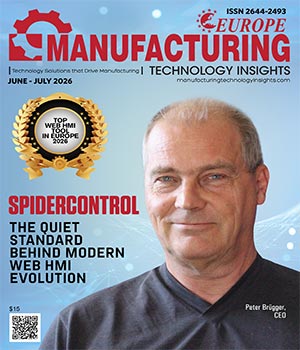
What early technological shifts influenced the evolution of web-based HMI systems? SpiderControl’s journey into web-based HMI began long before the market had language for what it would eventually become. At a time when industrial visualization was dominated by proprietary systems, closed architectures, and hardware-bound interfaces, the company made an early and deliberate shift toward web technologies. What initially appeared unconventional has since become foundational to how modern industrial environments approach accessibility, scalability, and long-term system design. Founded in 2003 and headquartered in Muttenz near Basel, Switzerland, SpiderControl built its platform around a clear principle: industrial visualization should be open, durable, and independent of short-lived technological cycles. This philosophy is reflected in its browser-based, device-agnostic architecture, which allows systems to be accessed through standard web browsers across PCs, tablets, and mobile devices—eliminating the need for proprietary viewers and reducing friction at the point of use. The strategic significance of this decision lies in how it redefined the relationship between control systems and user interfaces. As Peter Brügger, CEO, explains, “The idea behind it was to use a web browser, which is an open standard instead of a proprietary viewer, and to benefit from a network-oriented software architecture.” Bringing the User Interface Closer to the Control System How does integrating visualization with control systems improve efficiency and system adaptability? Rather than treating visualization as a separate layer requiring duplication and synchronization, SpiderControl embedded it within a network-driven model that connects directly to the control environment. This shift addressed a persistent inefficiency in traditional HMI architectures, where the separation between control logic and interface design often resulted in redundant configurations, higher engineering effort, and limited adaptability. By bringing the user interface closer to the control system through web-native communication, SpiderControl created a more integrated and maintainable structure, where visualization layers interact seamlessly with PLC and SCADA environments. Over time, the market has moved in this direction, with widespread adoption of HTML5-based visualization and browser-driven interfaces. Yet the distinction, as SpiderControl positions it, is not merely the use of web technologies but the depth of their integration into the system’s core design. The company’s early commitment was not to a trend but to an architectural model—one that continues to define its advantage as industrial systems evolve.
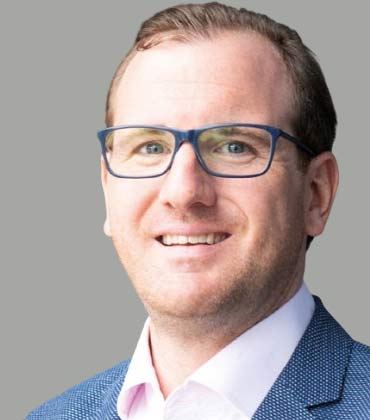
Robert Koppensteiner, Executive Vice President
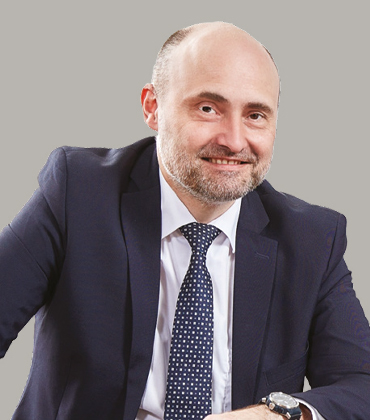
What distinguishes GFM’s approach to machine building and process development in manufacturing? Most machine builders start with the machine; GFM, a global leader in high‑precision manufacturing technology, starts with the technology. When GFM was founded in 1945, its goal was not to manufacture equipment but to define a process. That process—radial forging—remains the sole focus eight decades later. An 80 percent market share in hot radial forging machines reflects how completely it has mastered this single discipline. “It’s really in our genes,” says Robert Koppensteiner, EVP. “We always start from the technology. Then we build the machine around it.” Before GFM engineers a solution, it understands the material, challenges of grain refinement and porosity evolution. Tooling design, heating and forming parameters are developed together. The machine is the last step, not the first. Controlling Deformation at the System Level How does GFM control deformation differently compared to conventional open-die forging methods? In conventional open-die forging, force is applied from one or two directions. At GFM, typically four tools operate simultaneously in a single plane, working the material from all sides at once. Performance is defined by how precisely those tools move and how the process is executed for each material and geometry. The challenge in any forging process is the cross-section. The outside of a workpiece deforms readily. The centre is more difficult to deform. Getting uniform strain from surface to core is where most processes fall short. GFM’s hydro-mechanical drive addresses this directly; unlike conventional hydraulic systems, it allows fine, independent adjustment of stroke behaviour, deformation and contact time for each stage of the forging sequence, keeping interactions between tool and material short and controll.
Herve Stampfli, Head of Product Management
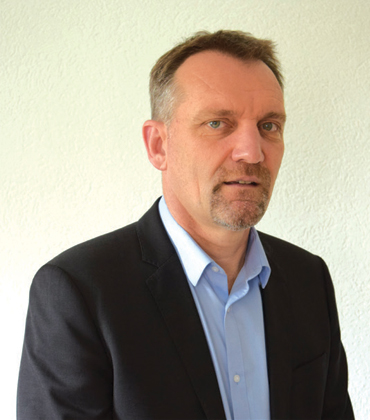
From semiconductor fabs to advanced electronics, motion systems remain the backbone of modern manufacturing. For OEMs, the challenge is no longer limited to a fast movement; it is now about achieving fast, accurate, and reliable performance every millisecond of every production cycle. In this environment, even the smallest disturbance, such as floor vibrations, position jittering, temperature fluctuation or contamination, can disrupt an entire process. Traditional motion setups, built from parts sourced across multiple vendors, often fall short in maintaining the tight integration required for peak performance. That is where ETEL gains its edge. With its Full Forward Integration (FFI) strategy, ETEL takes full ownership of the entire motion stack. This includes the supporting frame, active or passive isolation systems, the motion system—featuring optimized direct drive motors and advanced metrology—and motion control. The FFI approach ensures that every element is optimized to work together. The result is motion systems that are faster, more precise, ultra-stable and consistently reliable under real-world production pressures. This eliminates fragmentation and accountability issues that once plagued manufacturers relying on multiple component suppliers. By unifying every part under one roof, the company enables customers to focus on their core competencies with confidence in flawless motion performance. “The performance we deliver has a direct impact on our customers’ process yield and accuracy,” says Hervé Stämpfli, Head of Product Management. “And since we control every layer of the motion stack, we are able to meet those performance requirements very reliably.” MOTION SOLUTIONS AND ADVANCED CONTROL TECHNOLOGIES ETEL offers a diverse portfolio of motion technologies and systems for equipment manufacturers in the semiconductor and advanced electronics industries. Under its FFI approach, every solution supports a wide range of applications, from Front-end to Back-end segments, including lithography, process control, annealing, probing, dicing, wire, die and flip-chip bonding, test handlers, and more. “Today, the majority of our high-end motion system applications are propelled by the demands in Advanced Packaging, with heterogeneous integration playing a central role. This evolution is reshaping traditional semiconductor segmentation. Where the back-end once prioritized high throughput with moderate precision, and the front-end focused on ultra-high accuracy and cleanliness, Advanced Packaging is forging a new “mid-end” segment — one that requires all these attributes to coexist and perform together seamlessly,” says Hervé.
Framence is transforming how industrial teams access and manage critical information, cutting through the complexity of scattered data with its photorealistic digital twins. Acting like a ‘Google Street View’ for industrial environments, its solution provides a seamless, instantly accessible view of assets—eliminating the inefficiencies of navigating multiple systems. In fast-paced industrial settings, having real-time access to accurate data is not just a convenience—it is essential for efficiency and informed decision-making. Across industries, engineers and technical specialists spend up to 30 percent of their working hours searching for crucial data buried in ERP platforms, IoT networks, asset management tools, and cloud databases. The constant back-and-forth between interfaces makes retrieving insights time-consuming and inefficient. Framence streamlines this process by serving as a unified, user-friendly access point that integrates effortlessly with existing systems. Without altering third-party platforms, it ensures that teams can quickly locate and leverage the information they need, no matter where it is stored. Since its launch in 2019, the company has prioritized making digital twins fast, easy, and cost-effective to create and update—giving teams a smarter, more efficient way to navigate spaces, collaborate, and manage assets. “Whether managing a vast real estate portfolio or overseeing complex technical assets on a factory floor, Framence equips teams with everything they need at their fingertips—helping them spend less time searching and more time driving results,” says Adrian Merkel, Managing Director of Framence. Photorealistic Twins for Seamless Data Integration The company’s technology captures a photorealistic representation of facilities and embeds essential data points within the imagery. For example, engineers inspecting a pump in a facility no longer need to search through multiple software systems for maintenance records, IoT readings, or specifications. Instead, they can click on the pump within the digital twin, instantly accessing all relevant data from sources like SAP or IoT Cloud in one centralized, visually intuitive interface. This streamlined approach dramatically accelerates workflows and enhances decision-making. Beyond centralizing data access, Framence also addresses a key limitation of traditional digital twins—keeping them up to date. Conventional methods, such as laser scanning, require specialized equipment and professional expertise, making updates costly and infrequent. Over time, these digital twins become obsolete, making them less dependable for real-world applications. Framence takes a different approach, allowing users to update models using widely available cameras, including smartphones. This enables on-site staff to effortlessly capture new data without waiting for external specialists, ensuring the digital twin always reflects the current state of assets and facilities.
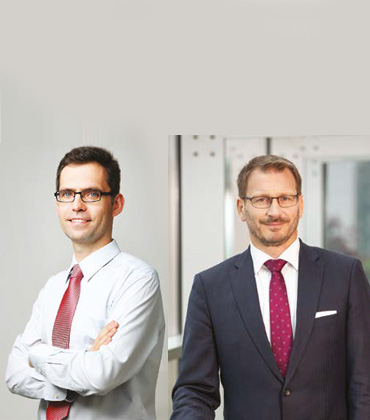
Tomasz May, Vice President of Global Sales and Andreas Schindler, Executive Board Member
Reliability, quality, and innovation—ISOVOLTA operates on these core pillars. A trailblazer in the electrical insulation domain, it brings deep manufacturing and material expertise to industries grappling with developmental challenges associated with motors, generators and transformers. Renowned for its cutting-edge solutions and high-performance insulation materials, ISOVOLTA partners with businesses worldwide to co-create nextgeneration electrical systems. By enabling advancements in energy efficiency and performance, the company empowers clients to thrive in highly competitive markets. This cements its position as a leader in the field. “Technology leadership is our internal mantra. We are pioneers in innovation and sustainable solutions, grounded in rigorous scientific methods, premium raw materials, and collaborations with top-tier suppliers and chemists. Every solution we deliver is meticulously tested and validated to ensure exceptional performance and reliability,” says Tomasz May, vice president of global sales. ISOVOLTA has significantly strengthened its capabilities in recent years through strategic investments in building high-tech laboratories and expanding its research and development (R&D) teams. These efforts resulted in a comprehensive suite of proven insulation solutions tailored to the unique demands of rotating and static electrical machines. Fueling Progress with R&D Excellence At the heart of its success is a commitment to R&D. Recognising the transformative potential of trends like e-mobility, ISOVOLTA has directed its efforts toward crafting novel insulating materials that meet the challenges of modern industries. An excellent example is its work in the e-mobility sector, which presents opportunities and challenges. The industry’s openness to innovation has accelerated ISOVOLTA’s development pace, accelerating its efforts to engineer insulating materials that are rigorously tested, proven, and designed for long-term performance. In response to the surging demand for energy-efficient electric motors and generators, ISOVOLTA developed high-performance materials that enhance energy density, creating more compact yet powerful machines. “We aim to deliver high-performance materials that empower clients to develop competitive and efficient solutions,” states Andreas Schindler, executive board member.
Material Handing
Thierry Wipff, Global Manufacturing Technology Engineering Tires, Continental Tires [FWB: CON]
Connected Worker

Maurizio Pietropaolo, Industrial Supply Chain IS Technician, Thales Alenia Space
Aerospace Manufacturing

Kaveh Djavaherian, Director Global Cloud Office (CCoE), Electrolux [STO: ELUX-B]
Aerospace Manufacturing

Fernando Pinho, Chief Information Officer / Vice President of IT, Newly Weds Foods
Flue Gas Desulfurization Equipment
Fabryce Kutyba, Vice President of Sales and Business Development, Meyers Manx
Advanced Material
Detlef Schramm, VP R&D, FRANKISCHE Rohrwerke

Machine Vision
Abraham Norton, VP, Operations, Creative Liquid Coatings
Radial forging enhances strength efficiency and sustainability, enabling advanced aerospace and automotive manufacturing across Europe through innovation, automation and material optimisation.
Web HMI tools enable real-time monitoring, automation, IoT integration, improved safety, scalability, and data-driven decision-making for modern industrial efficiency.
Engineering Industrial Systems For Long-Term Control

Manufacturing Technology Insights Weekly Brief
Be first to read the latest tech news, Industry Leader's Insights, and CIO interviews of medium and large enterprises exclusively from Manufacturing Technology Insights
